LinkBlm

SaaS Creative Case Study

One website in,
three testable creative routes out.

The subject here is a customer-support SaaS selling into overseas markets — it pulls customer conversations from every channel into one workspace, then lets autoreplies absorb the repetitive questions. We used nothing but its public website as input, started from no template, and pulled three creative routes out of it: efficiency, team coordination, and risk reversal. What follows is the input, the reasoning, and the calls we made.

1public website as input
3creative routes
3sets of vertical assets
7-pointquality review
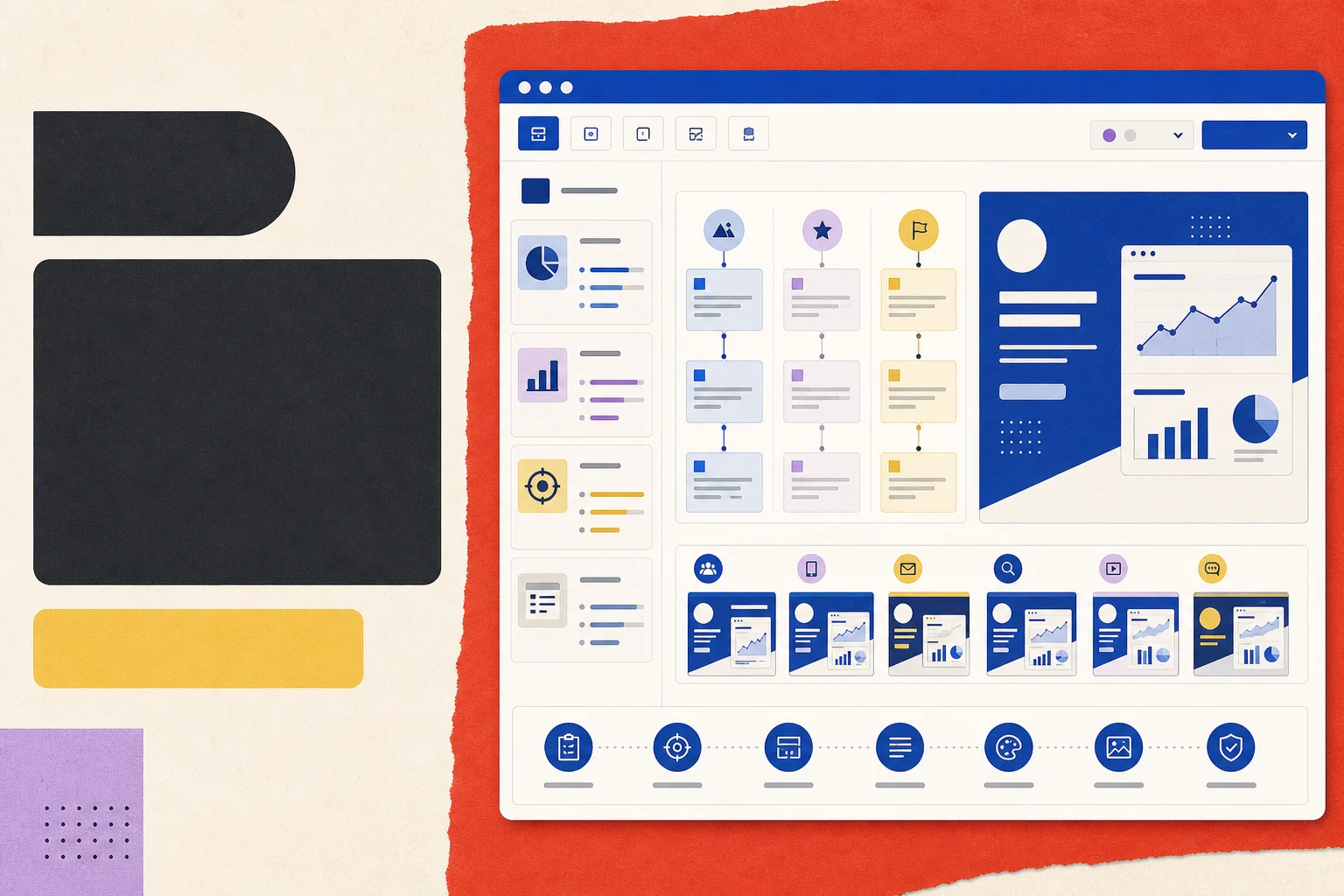
一批产品事实推导出多条创意路线的示意插画
Product facts read off one website, fanning right into three routes that each stand on their own.

From input to finished asset

Four steps that flatten creative production into one line.

01

Read the product as facts, not as a prompt

Feed in the public positioning, page copy, and live brand assets, then pull out what the product does, who it is for, which claims hold up, and what must never be rewritten. Logos, product names, and hard numbers get locked.

02

Split one selling point across different audiences

A product no longer gets just one creative. The same capability speaks to headcount cost for a support lead, to coordination for a team juggling channels, and to risk reversal for someone who has not committed yet — so every version carries a specific problem and a specific ask.

03

Generate several visual directions at once

Each of the three routes gets its own vertical feed composition. The system handles the volume, but every image keeps its own headline hierarchy, product subject, and call to action.

04

Let review catch risk, then let a person decide

Finished assets go through a 7-dimension quality review covering brand, visual, copy, product truth, channel fit, compliance, and novelty. Review flags risk; it does not replace the final human call.

The reasoning behind each route

Why one product yields three arguments that do not overlap.

Efficiency

Who it speaks to
A support lead buried in repeat questions
Which product fact it rests on
Public materials state it aggregates conversations across channels and autoreplies
Core claim
Hand the repeat questions to autoreply; people handle only what needs judgment

This is the pain a support team can actually put a number on. Framed as headcount cost, it lands harder than an abstract promise of efficiency.

Coordination

Who it speaks to
Ops and sales teams tracking messages across channels
Which product fact it rests on
The product pulls several social and messaging channels into one workspace
Core claim
No more bouncing between dashboards — the team is looking at one timeline

The same capability seen from the team's side is a different argument entirely. It is not about saving headcount; it is about saving the back-and-forth.

Risk reversal

Who it speaks to
A lead at a small team still comparing options, not ready to commit
Which product fact it rests on
The product offers a self-serve trial you can sign up for directly
Core claim
Plug it in for a week, then decide whether it stays

When the resistance is not "I doubt it works" but "I am not sure it is worth switching," lowering the cost of step one beats another round of feature talk.

What this run demonstrates

No physical product, and marketing assets still ship continuously.

As long as the product facts and brand assets are clear enough, you can generate candidates across audiences, angles, and channels in batches — no starting from a blank canvas every time.

What comes next

Let real feedback decide which route earns another round.

Volume is not the finish line. Take the candidates into real channels, record what gets used, what gets rejected, and how it performs, then feed that back in. That loop is what makes a creative system sustainable.

About this case study

Why pick a SaaS product for this?
SaaS has nothing to photograph, which makes it the hardest category to build marketing assets for — no product shots, no staged scenes, no packaging texture. If this category can ship assets continuously, anything physical only gets easier.
Did AI draw these from scratch?
No. Product screenshots and logos come from public assets and stay frozen through generation — the model never rewrites them. AI handles what surrounds them: the scene, the light, the mood. The text on the image is not drawn by the model either; it is rendered deterministically, which is why none of the letters come out warped.
How were the three routes decided?
First pull verifiable facts out of the public product information, then match them against what is actually holding each audience back. Efficiency, coordination, and risk reversal map to three different versions of "why haven't they bought yet." Routes have to be mutually exclusive — a new color palette or a reworded headline is not a separate route.
What does the 7-dimension review actually check?
Brand, Visual quality, Copy, Product truth, Channel fit, Compliance, Novelty. It returns explainable risk flags rather than one blanket score, and it does not replace final human sign-off.
Why not name the product?
The subject of this run is not a customer or a partner of ours, and naming them would read like we were implying otherwise. What this page is here to explain is the process — the category, the product facts it rests on, how three routes came out of it. Say that clearly and the conclusion holds regardless of who it was.

Make the next case study your product.

Sign up free and get 100 one-time credits. Feed in your product and generate a first set of testable marketing content.